 "Katagiri found a giant frog waiting for him in his apartment" (91).
Where do you go from there?
Using the 1995 Kobe earthquake as the common thread, Murakami discusses friendship, loss, confusion, family, and even super heroes in these six short stories. A man losing his wife and possibly much more, two friends seeing art in the love of building bonfires, a son questioning his faith while searching for his real father, a woman turning a business trip to Thailand into a personal vacation, these stories take you to another part of the world and into other ways of living. The stories are quick and interesting because of the way they end, leaving blanks for you to fill with your own details. It's clear Murakami writes stories to figure things out; you do the same by reading them.
Murakami asks many of the same questions you do about life, laying down events that will turn over in your head for weeks after you finish. Why would he say that? What was in that package? Why is she so angry about it? What's with the giant frog in his apartment?
Sunday, April 27, 2008
After The Quake
Other Info:

Saturday, April 26, 2008
Parable of the Sower
 "It's raining.
"We heard last night on the radio that there was a storm sweeping in from the Pacific, but most people didn’t believe it. 'We'll have wind,' Cory said. 'Wind and maybe a few drops of rain, or maybe just a little cool weather. That would be welcome. It's all we'll get.'
"That's all there has been for six years. I can remember the rain six years ago, water swirling around the back porch, not high enough to come into the house, but high enough to attract my brothers who wanted to play in it" (45).
There has been no rain for 6 years, the future in Butler’s story is dry and desolate. California has become a living hell. What does the future hold? How can a population survive?
Octavia Butler seeks to answer these questions in her creation of a dystopic world of the future. Written as a journal between the dates of Saturday, July 20, 2024 and October 1, 2027, the 15 year old author, Lauren Olamina, struggles to make sense of her world. It's a different world from the one that we are used to now. In 2024, People live in walled communities and outside the walls is anarchy. It is not safe to drive to work; cars are hijacked, people are shot at, and arson is a regular occurrence. Water has become extremely rare and people will kill for it. Everyone carries a weapon for safety. Addiction is common and the favorite drug of choice is one that causes its users to burn, rape, and murder. Life is hell, yet people still try to raise families and survive the best they are able.
Lauren has been raised in a loving family in a town called Robledo, twenty miles from Los Angeles. Her Dad is a black college professor and preacher and her step-mother’s name is Corazon or "heart." It's a good thing that Lauren's step-mother has a lot of heart, because Lauren's mother was drug addicted and Lauren was born with a syndrome called, "Hyperempathy." Lauren shares the pain and suffering of others. She feels what others feel as if it is happening to herself. This makes for a difficult life and Lauren has developed all sorts of ways to protect herself. Unfortunately, the walls don't hold and Lauren is thrust out into the world and left to survive on her own. She finds herself walking the freeways to northern California, supported by the friends she picks up along the way and her philosophy of life. "We are Earthseed / The life that perceives itself / Changing" (117).
Olivia Butler is one of the first of a very few black female science fiction writers. Her stories are about people who struggle with a marginalized existence and find power and faith in community. She also writes very interesting stories about alien/human encounters, and stories about populations of people with various types of genetic mutations. Her books are fascinating studies of marginalized existence. People have to struggle to make it in the world. What is ethical/permissible when one has to struggle for one’s very existence – for one's right to life? Ms. Butler shows us lives in extremity, people trying to do the best they can with the resources available. It isn't always a pretty sight, but it is always gripping and sometimes sensational. Her characterizations offer sparkles of light in otherwise bleak situations. Possibly a metaphor for those of us that struggle in our society today, Octavia Butler’s novels are always creative, honest, and startling imaginative.
(originally posted at: variations on a theme)
Other Info:
Friday, April 25, 2008
Mama Day
 I am writing to recommend you read Mama Day by Gloria Naylor and The Awakening by Kate Chopin. I read both of these books for classes as a students at Chico State, but I wish I had been introduced to them in high school.
The book Mama Day follows the story of Mama Day, an older woman living in a small town called Willow Springs. Mama Day is a spiritual woman who can perform magical and mysterious tasks, like bringing about lightening storms. The novel also focuses on Mama Day’s great-nice, who goes by the nicknames of Cocoa and Baby Girl. Cocoa is the only character to have left Willow Springs in search of a big city life. Throughout the story you will read about the magic and odd ways of Mama Day, the love story of strong-willed Cocoa, and the mishaps of the other friends and family of Willow Springs. This story contains powerful point of view shifts, with some of it being told through a third person narrator and some of it being told through Cocoa and her boyfriend George’s conversations, and a sense of magical realism that draws the reader in and always leaves the reader wanting more. It also follows themes of family heritage, women’s changing roles, and African-American race struggles.
The Awakening deals with one woman's awakening to the type of life she never thought possible. Edna, a woman and mother, come to discover herself while vacationing with her family one summer. She realizes that she wants to be more than a mother and wife so she moves out on her own and pursues her dream of being an artist. This is a powerful and interesting novel that showcases Edna's journey into becoming the type of independent woman we know today.
These books are so interesting and intriguing, you won’t be able to put them down. I really enjoyed my reading of these books and can’t wait to share them with someone else.
Happy reading
(originally posted at: Susan's Blog)
Other Info:
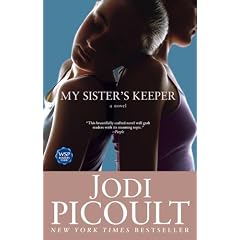
My Sister's Keeper
 Hello Perspective Reader!
I have a great book for you. This is a book that I wish I had read when I was your age. The book is called My Sister's Keeper by Jodi Picoult. This book is about Anna, who was conceived to be a donor of blood and marrow for her older sister Kate. Kate has lukemia and without her sister's donations she would die. At the age of 13, Anna is sueing her parents for the right to be able to make decisions on how many procedures and donations she gives to her sister.
What I enjoy about this book is that it is written from all of the character's perspectives. You can see the issues the family is dealing with from many angles. If you want to listen to a podcast from the author about this book you can got this website, www.jodipicoult.com
(originally posted at: My Sister's Keeper)
Other Info:
The Power of One
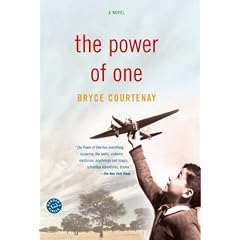 The book I have chosen to recommend...is The Power of One by Bryce Courtenay, published in 1989. I did not read this in high school but as an adult about five years ago. I continue to recommend it to friends and am planning to suggest it to some of my advanced readers in 7th grade at Redwood Middle School.
I found this book extremely engrossing and powerful. It is the story of a young white (English) boy growing up in South Africa in the 1930’s. Peekay, the main character’s name, is sent to boarding school at the tender age of 5 and suffers many torments by the older boys who are Afrikaners and hate the English. They physically abuse Peekay, kill his pet chicken, and make his life miserable. Throughout these years of anguish, Peekay somehow manages to survive. He meets a small black man, Hoppie, who is a talented fighter, who takes Peekay under his wing and teaches him to box. Peekay, altho ugh small, becomes able to defend himself against the older, bigger boys who bully him.
Peekay meets an old music professor, whom he calls Doc, who is supposed to be teaching him music. Doc becomes Peekay’s close friend and teaches him about everything. Doc is a truly good man who is also extremely wise.
During the entire book, Peekay and Doc and Hoppie all are affected by the brewing war in Europe, the fear of the Nazis, the racial hatred between whites and blacks, and English/Afrikaners/Germans. Peekay grows into a talented well-known boxer who becomes welterweight champion of the world. His triumph against all the odds is a testament to the power of the human spirit and thus the title, The Power of One.
I think that your students would find this character very appealing. The ability of Peekay to overcome his seemingly insurmountable personal obstacles and the prejudice and politics of South Africa is very inspiring. Students should be able to connect his experiences to their own lives, and probably find that their own problems are minimal compared to those of Peekay. I absolutely LOVED this book and went on to read the sequel, Tandia, which tells of a mixed black/Indian girl and the terrible injustices/prejudices she endures in South Africa. Peekay meets Tandia and his story continues. The only caveat to my recommendations is that The Power of One and Tandia both contain some violent scenes and sexual abuse. Readers must be mature.
Best Regards
(originally posted at: Queen Mona)
Other Info:
Kiss of the Spider Woman
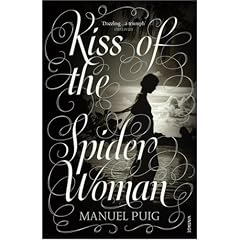 Manuel Puig's Kiss of the Spider Woman uses dialogue as a means of telling an intricate story about relationships and the soical context that informs our understanding about our identity.
The book deals with sexuality and identity--and it helps the reader grasp their biases about gender roles and "appropriate relationships." I enjoyed reading it and reflecting on my own feelings about human relationships.
(originally posted at: alma)
Other Info:
Siddhartha
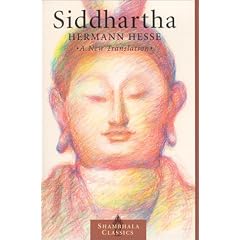 I strongly encourage the reading of Siddhartha by Hermann Hesse. Set during the time of the Supreme Buddha Shakyamuni, it follows the journey of Siddhartha, who follows a similar spiritual quest for "enlightenment" as the Buddha.
I feel very fortunate that my dad and my friends encouraged me to read this enjoyable and profound novel when I was in high school. I have found this book to be useful over the years whenever I have been faced with life's challenging questions. Siddhartha opens the mind to appreciating all of life's events, good and bad, and understanding that life’s lessons lead to experience, knowledge, and eventually wisdom. Hermann Hesse's writing flows so well that it can easily be read in one sitting. I hope you take the time to read this very important book that will potentially change your perception and life.
Other books I recommend from a wide variety of cultural backgrounds addressing the human condition include: "The Four-Fold Way" by Angeles Arrien; "Jonathan Livingston Seagull" by Richard Bach; "Mastery" by Hazrat Inayat Khan; and "The Penguin Krishnamurti Reader", a collection of works by Jiddu Krishnamurti. Also interesting are "Striking Thoughts: Bruce Lee's Wisdom for Daily Living" by Bruce Lee and "Chelsea Horror Hotel" by Dee Dee Ramone, the infamous bassist and songwriter from the Ramones.
(originally posted at: Ian's Blog The Best Blog Ever)
Other Info:
Passing
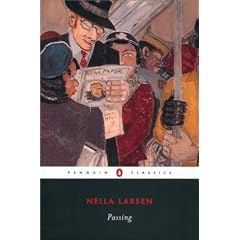 I strongly recommend reading Nella Larsen's Passing (1929). This is a powerful piece of American literature that captures one vision of the complexity of race politics in our society. It was written during the Harlem Renaissance (1920's-1930's), a prolific period of African-American writing. Main characters Irene and Claire are mixed-race (half-black, half-white) women struggling to find their place in pre-civil rights American society. Each of them "passes" as white women in upper middle-class and upper class white New York (Manhattan) society. Themes about ambiguity, invisibility, sisterhood as well as betrayal flow throughout the story.
I encourage readers to try to put themselves in the shoes of these characters and imagine a world, a real American reality, where you must navigate through a severely racially divided society in which your skin color (and phenotypes) determines your treatment as human beings as well as your access to resources for good living.
Passing is a great book to spark debates over personal and societal morality. This book provides a rare look into a world of "passing" -- pretending to have one racial identity to conceal one's true race as a means to survive under oppression. Larsen does comment on the psychological consequences that can consume the person through the life decisions Irene and Claire make. The main characters' perspectives can teach the reader about what life was like for some African-American women in the late 1920's in Harlem.
I personally appreciate the story because I am an African-American woman who has many relatives who grew up under the cruel oppression of American racial apartheid. Some of my loved ones had to make intense decisions about "passing" to access a bathroom, gas station or restaurant while their own loved ones (children and wives) were too dark "to pass". Some of my mother's side is currently passing as white having disowned the rest of us. I have never met them.
The history of our nation, the root of our identities as citizens living together, living under the Constitution asks all of us to follow a "moral compass" of how to treat each other. Unfortunately, the characters in Larsen's masterpiece as well as people in real life (like my elders including my beloved mother) had to navigate the treacherous waters of racism challenging their self-identities as Americans and sense of self worth as human beings.
I encourage you to open your mind and gain compassion for those who had to "pass" to survive. Also pay attention to the internal conflict they face, the war inside these "passers" as they felt compelled to hide who they were. I am sure a lot of young people can relate to that feeling in some way especially in high school.
For those of you interested in learning more read Caucasia (1998) by Danzy Senna, another story very related but involving the struggles of a young girl passing as white in the 1970-80's New England area. This is real. It in some ways still happens for people to survive an internal conflict in their minds about their self-worth. Good luck with all of your work and thank you for reading.
(originally posted at: School Reform Torch Runner)
Other Info:
The Kiter Runner
 Thank you for an opportunity to recommend a book to you that I read several years ago, but which left a lasting and indelible impression on me. The Kite Runner offers readers a glimpse into a world of pain, hope, friendship, family loyalty and Middle East trauma that I would never have known otherwise. I highly recommend it.
Before reading this novel I knew only headline news about the situation in Afghanistan currently or back in the 1980’s. In other words, I knew very little. Yet the novel, without alienating me for lack of historic knowledge, offers a window through which to view a world in tumult. At the center of this world is Amir, the protagonist and narrator of the novel. We follow Amir through his childhood in Afghanistan, where he spends his days with a bestfriend Hassan, the son of his father’s servant.
The two boys “kite fight” together and Hassan knows where the kite will land without even seeing it. Eventually Hassan follows a fallen kite to a place where he is brutally attacked by boys from Amir’s economic and social class. Amir witnesses Hassan’s victimization but does nothing to stop it. The scene forms an early turning point in the book, as Amir’s ensuing guilt and pain follow him for the rest of his life as he seeks atonement for not helping his friend.
Though The Kite Runner challenges readers to make sense of complex emotions and competing loyalties among characters, it never feels forced or inconsistent. We relate to Amir’s guilt and pain. We understand the complexities of his friendship with Hassan and his need to please and reject his demanding father. At its core The Kite Runner is about love, real, honest, hopeful, painful, redemptive love. I highly recommend you pick up a copy.
Happy Reading!
(originally posted at: LucyLines)
Other Info:
Kindred
 I am recommending the book Kindred by Octavia E. Butler. I recently read the book and couldn’t put it down. It is a sci-fi fiction novel that follows Dana, an African American woman, who is transported from California to Maryland. The interesting part about this book is that she crosses not only space, but time. In California the year is 1976 and on her first visit to Maryland it is the year 1815. She is transported several times. She meets her ancestors and realizes that they are the reason she is traveling between two worlds. Dana has to keep going back to Maryland to save her future existence.
I thought I would include some reviews from students your age that enjoyed reading this book.
"I chose this novel for my outside reading in my English class. As usual, I was prepared to sit through another boring English book – but boy was I wrong? The book is great – and I would recommend it to anyone. Don’t be turned off because it’s considered 'science fiction' – it's not about space or little green aliens or even going into the human body. It's a wonderful story of human values and integrity."
- Jessica, 11th grade
"This is a great sci-fi historical fictional novel. Personally, I have historical fiction, but this was, well, amazing. Octavia E. Butler joins both in an unimaginable way, making this novel so memorable. I've already read the book twice and I bought it a month ago. I was so surprised at how good the book was! THIS IS A MUST READ!!"
- Ima, 10th grade
I hope I have sparked your interest in suggesting this book.
(originally posted at: Book Suggestion)
Other Info:
Letters To A Young Poet
 My book recommendation is specificto the budding young authors out there. I was writing stories and poems inelementary and high school. In college I continued in the Creative StudiesDepartment at the University of California Santa Barbara. The writingprogram there was fantastic and inspiring. One of the books I discoveredin college and still read year to year is "Letters To A Young Poet" byRainer Maria Rilke.Rilke was great German poet who was born in 1875. He is work is renownedfor it's sensitivity and dealings with the inner workings of humanemotion. Much like a lyric driven rock star, many of his fans wrote himletters asking him life questions and further understandings of themeaning of his work. From 1903 to 1908 he wrote a series of letters to awould-be poet who wrote to ask if he should pursue writing. Rilke'sresponses are amazing and inspiring and really chronicle what it's like tobe a sensitive observer in the real world. This is one of those books Iuse when I'm feeling as though I'm not living up to my potential or if Ijust not good enough. Its a real quick read and barely 100 pages butreally hits home for those creative souls out there. The message hedelivers can be universally applied to every creative endeavor. I highlysuggest you pick this up for a great summer read.
(originally posted at: One Take Rants)
Other Info:
Bellwether
 The following are all books I read very quickly and enjoyed immensely.
bellwether by Connie Willis - a book about fads, chaos theory, working in offices, attraction, and sheep. I liked it.
Coraline by Neil Gaiman - the author mentions in supplemental notes that children "see it as an adventure," while it "gives nightmares" to adults. Well written. Also, check out Gaiman's "faerie" tale for Stardust.
Bear v. Shark by Chris Bachelder - fictional book about a family/culture obsessed with a reality TV event hosted in Las Vegas, where a shark fights a bear. This book is funny and prophetic.
Cat's Cradle by Kurt Vonnegut - a journalist goes through wild, apocalyptic adventures while trying to interview the grown-up offspring of the scientist who invented the Atom Bomb (and another substance called Ice-9).
Ender's Game by Orson Scott Card - I recommend other books the in "Ender" and "Shadow" series, but this first one is the best. It's a sci-fi book about genius children trained by a global military to fight an interstellar war. These children think like adults, but they run into the same struggles as all others their age. I also recommend Card's thriller about government and American politics, Empire, in which America responds to the assassination of both the President and the Vice President.
(originally posted at: CC)
Other Info:
Intern
 The book I’d like to recommend...is called Intern by Sandeep Jauhar. It’s an autobiography, but don’t let the title throw you. It’s not a book for interested med students only. This is a true story of a doctor who learns some unforgettable life lessons during his internship.
High school juniors and seniors commonly struggle with that definitive question: “What do I want to do with the rest of my life?” In the book, the author is perpetually vacillating with his decision of becoming a doctor throughout his internship. He is not the quintessential, promising candidate that one expects to choose medicine as a profession. During his early to mid twenties, Sandeep Jauhar reveals how he struggles with enormous self doubt on a daily bases. It’s authentically written, and I believe eleventh and twelfth grade students will fully appreciate that.
The book is filled with personal anecdotes describing Dr. Jauhar’s interactions with patients, medical staff, and of his relationships with his girlfriend and family members. The common reader can easily identify with some of his personal struggles, which makes certain parts hilarious to read. As one review put it, “Some parts are graphic because after all, he is describing the functions and dysfunctions of the human body.” But with Dr. Jauhar’s natural style, he allows the reader to leap inside his head with him and feel his true emotions. The students will find themselves laughing out loud, and shedding a few tears on occasion.
The book also touches on cultural and family pressures, and it’s encouraging to read of someone who is now greatly esteemed yet has endured life’s difficulties like most everyone else.
Lastly, the book may encourage [readers] as they realize that even great people fail and that it is not uncommon for great people to often question themselves. It may encourage [readers] to confront their own fears regarding their future-to take that leap!
Intern is page turner and anything but boring. I strongly recommend it.
(originally posted at: Joanna-techtalk)
Other Info:
East of Eden
 I highly recommend that you read John Steinbeck's East of Eden. This book should have regional significance for you, since it is set in the Salinas Valley. In fact, you might recognize some of the landmarks Steinbeck refers to. The descriptions of the landscape will be particularly interesting to those of you who enjoy the natural environment. However, even if you are not a fan of the great outdoors, Steinbeck's vivid descriptions will make the world of the novel come alive for you.
The novel's structure intricately mixes several different stories, so you will be exposed to many different characters and tales. This mixture of stories makes the book exciting, but it has another purpose as well: it shows that we are all connected to one another in some way, a theme that the title of the novel hints at. I hope you are intrigued to read more, because Steinbeck's great writing and wonderful characterizations await you. I believe that this book will stay with you for many years.
(originally posted at: Melissa's Blog)
Other Info:
The Grapes of Wrath
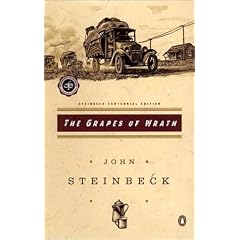 One of my favorite books is The Grapes of Wrath by John Steinbeck. I highly recommend this book for any reader. Though the number of pages may seem staggering, once you begin reading, you're hooked and will not be able to put the book down. I believe this is one of the greatest books ever written for several reasons. First, I LOVE the turtle chapter (Chapter 4)! That's what I call it, the turtle chapter. Not only does he use this chapter to foreshadow the story of the Joads, but he uses my favorite animal, the turtle, as a metaphor for life. When I feel life is weighing too heavy, I read this chapter and I feel better. This chapter is only two and a half pages, but is so rich in imagery and message, you can not help but be amazed at the artist and his craft. (Read just that little bit and see if you agree with me.) Second, Steinbeck's portrayal of the American Dream gone awry is as valid now as it was 70 years ago when the book was written. As we face a recession, and the possibility of a depression, it is important to look back and see what mistakes were made when we were last in this situation. It is important that we learn from the past, and not repeat it. When The Grapes of Wrath was published, it was both attacked and praised for its content. The book was banned in some places, yet it won the Pulitzer Prize for Literature. Not only did this book win awards (and was made into an Oscar winning movie), it brought about social change. Now that is powerful writing. Next, John Steinbeck is my favorite god of writing and this was his masterpiece. I have much in common with him; he was a native Californian, he grew up in a valley, he loved Monterey, he enjoyed stories of King Arthur, and he believed that a writer "is charged with exposing our many grievous faults and failures, with dredging up to the light our dark and dangerous dreams for the purpose of improvement." Many of his stories are set in California, in places I know, so I feel a connection to the stories that I do not feel with other writers. Best of all, you can go to Salinas in less than an hour and visit the National Steinbeck Center! It is a wonderful museum, full of animated and interactive exhibits, all of which deal with John Steinbeck and his stories. After you've read the book and visited the Center, check out and watch The Grapes of Wrath with Henry Fonda. It's not the whole story (they leave the best parts out-Hayes Commission, you know), but it is good.
(originally posted at: uhh... her blog)
Other Info:
First Crossing
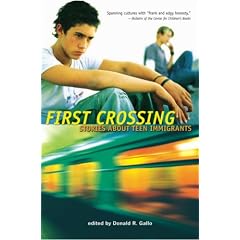 I think you would enjoy this book. Please drop me a line if you like a story from this collection.
Crossing borders is an inherently risky undertaking. The very existence of a border implies a forbidden territory, whether it is geographical, legal, emotional, social, or physical, and crossing into that forbidden territory is dangerous. In spite of the danger, human beings are drawn to the other side of any given border. It may be for better living conditions, for freedom of action and thought, or because of a sense of adventure. Whatever the reasons, but people frequently cross borders. In these short stories, many limits are tested, many borders are crossed, and the end-result is often eye opening.
All of the stories tell the experiences of teen immigrants. An extraordinary array of characters highlights one or more aspects of each teen's heritage. There are stories of immigrants from Mexico, Venezuela, Afghanistan, Korea, Romania, and others. The teens are trying to assimilate into the culture of their adopted country while trying to keep the part of their birth culture alive. Not only are these teens struggling to fit into the dominant culture, they are trying to conform to their home culture too. The individual authors paint some memorable pictures of resilient teens caught between two strong forces. The stories invite readers to open their minds a little wider and think a little deeper. These are not simple tales of racism; they expose the xenophobia present among all of us.
The tone of each story is as varied as the cultures the stories represent. Some stories are downright humorous. Many of the stories are told from the point of view of the protagonist. I think this is appealing to teenagers, as well as to adults who have that long-lost teenager hidden within their hearts.
(originally posted at: Methods Class)
Other Info:
Whale Talk
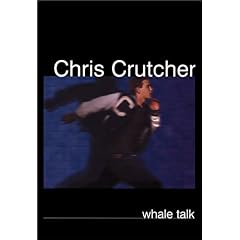 Hi. My name is Stacy, and I am in the teaching credential program at SJSU. My professor asked everyone to choose a book that all of you, hopefully, may find interesting to read. When I was in high school, I liked to read novels that were plot driven, books that held my attention through twists and suspense. The novel that I am recommending to all of you is Chris Crutcher’s Whale Talk; although I never read this novel in high school, I'm sure it would have become one of my favorite books because it is an incredibly fast read. Chris Crutcher is currently one of the most controversial young adult authors because he addresses many serious issues that are usually brushed off as taboo in young adult fiction. Although his novels have been banned in many schools, they consistently receive rave reviews by critics and high school students. Whale Talk tells the story of T.J. Jones, an intelligent and witty biracial outsider who decides to rebel against his predominantly white peers. T.J. decides to bring together fellow misfits in order to create his own swim team. Because his high school glorifies athleticism, varsity jackets, and masculinity, T.J. believes that creating a swim team will force his peers to give the misfits the respect and dignity that they deserve. While the novel is funny and entertaining, it is definitely not lighthearted because Crutcher addresses issues such as racism, physical abuse, and pride. I finished the novel in a couple of days, and in my opinion, the ending left me speechless. I will tell you now that it is not your typical happy ending. And if you don’t want to take my word for it, the American Library Association ranked Whale Talk as the best book for young adults. I really hope all of you will read this novel and if you don't, I hope that you will set out to discover the books that interest you.
(originally posted at: Novel Recommendation)
Other Info:
Monster
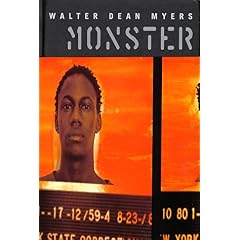 I think that you would enjoy Walter Dean Myers's Monster. There are many reasons why this book is an appealing read and why you should check it out. The story concerns a sixteen year old boy, Steve Harmon, who is facing murder charges as a result of a botched robbery. He allegedly acted as a lookout. If he is found guilty, he faces life in prison. The title refers to how the prosecuting attorney identifies Steve in her opening statement, he is a monster. And while the story is about Steve’s experiences in jail and during his trial, throughout the novel, Steve grapples with this notion of himself as a Monster. He tries to determine for himself if he is the monster the prosecutor portrays or not. He also wrestles with the question of his own guilt. One reason you should read this book is the narrative style. The narrative style is very unique and provocative. Steve is an aspiring film student, and the trial half of his story is told as though it were a movie screenplay. I love this approach because this approach conveys how surreal the court experience is to Steve. This is not where a “good” kid like Steve belongs. And Steve deals with this foreign and unreal situation by separating himself from the courtroom action and thinking of the trial as a screenplay. It’s not that he doesn’t take his trial seriously; he just really can’t believe that it is happening to him. Interspersed between the courtroom scenes are Steve’s own inner thoughts, presented as a journal. While in jail, Steve keeps a journal of his thoughts, feelings, and experiences (some of which are painful and difficult to read). It is an interesting juxtaposition to have the emotional journal and the sterile courtroom screenplay side by side. I think this style is very interesting because both aspects of the narration depict a scared, vulnerable teen.
Another reason to read this book is that it makes you think and interact with a lot of themes and ideas. One idea is judicial prejudice. Steve’s lawyer tells him that, despite the careful selection process, the jury already assumes his guilt. This story will help you think about how race, class, gender, age, etc. contribute to judicial prejudice as opposed to judicial impartiality. The novel also will cause you to think about our current judicial system. If Steve did act as a lookout, he is an accomplice to the crime, and because of the way that the law is written and executed he faces the same punishment as those who actually pulled the trigger. Yet, this is Steve’s first offence, and all he did was walk out of a convenience store. Even if he is guilty, is it fair for him to get a life sentence? What do you think is fair or appropriate in his circumstance? These are questions you will grapple with as you read the text. Also, like Steve, you will question his guilt or his innocence. A main theme in the novel is the question: Is Steve a monster? There is ample evidence that he is a good, serious kid. But, did he do the crime? Is he guilty or innocent? If he is guilty, does that mean he is the monster he is identified as? These are fascinating themes and questions you will interact with as you read the novel.
On a less serious note, another reason to check this novel out is that it is a quick read. It is about 300 pages long, but because of the structure and style, there is probably only about a hundred or so pages of text. The journal sections are written in a very large print (as though they were actual hand written journal pages). The screen play has a lot of dialogue breaks and spaces on the page. So, if you read this for your outside reading book, you probably would get credit for 300 pages, and only have to do the work of reading about 100! But seriously, I think that you would enjoy this book.
(originally posted at: Methods Pupil)
Other Info:
Me Talk Pretty One Day
 Me Talk Pretty One Day is a memoir by David Sedaris. The book is a collection of short essays which introduce us to a variety of characters and situations in which he's found himself over the years. He writes with an edgy, honest view of himself and the people in his life. His crazy family, bosses, friends and behavior had me literally laughing out loud. Sedaris describes a variety of bizarre people who have entered his life at one point or another - including a murderous co-worker, his frazzled secretary/drug-dealer, a performance artist whose only furniture is a nest made of human hair, his groovy-midget guitar teacher, his potty mouthed-well meaning little brother, and his crazy sister who likes to dress and act like other people. He also includes several essays from his tenure as a resident of Paris. His witty, sarcastic and self-depreciating observations are addictive. This book serves as an excellent refuge from our own lives, into the life of someone able to pinpoint his own, as well as others', oddities and enjoy them for their peculiarity. He validates crazy decisions, and truly understands the need for completely irrational behavior. David Sedaris has been called "The Rock Star of the Literary World," and I couldn't agree more. Read this book somewhere you can laugh out loud, because it's hard to hold it in!
Let me know what you think!
(originally posted at: Heather's blog)
Other Info:
Pretty Birds
 Imagine that you are a high school senior in Sarajevo, Bosnia in 1992. This is a modern European city, not so different from Santa Cruz or San Francisco. You are looking forward to the upcoming basketball game as you are the star of the team and you're having an affair with your hairy muscular coach. You enjoy cappuccinos at the local cafe, you just bought Madonna's latest CD, and you're looking forward to getting your driver's license. Then one morning you wake up and there are gangs of armed thugs roaming the streets. Because you are half Muslim, you and your family are forced out of your apartment, your father is beaten before your eyes, his face ground into the pavement by the heel of a boot, and you are brutally raped in the middle of the street while your mother stands powerlessly watching in horror. How would you react? What would you be capable of doing in response? What if someone gave you a high-powered rifle and trained you to hide on the upper floors of bombed out buildings and kill from a distance people who you didn't know? How would it feel to pull the trigger and watch through binoculars as a pool of blood grew on the pavement around the fallen body of someone who might have been your neighbor, or sold you a shirt in the mall, or who was on the other team at the last basketball game you played? This is the story of a Bosnian girl who became a sniper in the Siege of Sarajevo. The details are fiction, but the reality was that there were many teenage girl snipers fighting on both sides of the conflict. This book reminds us of the fragility of our civilized existence, how all of the creature comforts that we take for granted can disappear overnight, the electricity gone, the water turned off, the stores empty of food, and our existence reduced to a desperate struggle for survival. This book is so powerful because it is basically a true story told from the point of view of a normal, fun-loving teenage girl who is forced to wrestle with profound questions of morality and find within herself deep reserves of strength and resilience. You will find yourself unable to put this book down because you will find yourself asking "What would I do and how would I feel?"
(originally posted at: trancedance)
Other Info:
His Dark Materials Trilogy
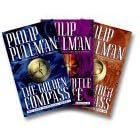 I want to recommend you read the His Dark Materials trilogy, the first book of which is The Golden Compass, the inspiration for the recent movie.
First of all, the movie sucks. Don't watch it. It is nothing but a mindless adventure story that will rot your brain. The books, on the other hand, will carry on an amazing level of conversation with you. It is written at the 5th or 6th grade reading level, so the mechanics of the writing (vocabulary, sentence structures, et cetera) won't be that difficult for you. Why is a prospective teacher recommending you read it? Because of that level of conversation I mentioned.
The book not only discusses a large number of themes -- centering around coming of age and various religious/spiritual/philosophical topics -- but actually converses with you about them. What do I mean by that? I mean to say that, as opposed to the vast majority of what posses for literature nowadays (and even what passes for canonical literature, that is, the "big name" literature you've no doubt been forced to read and re-read by this point), the book's exploration of these themes occurs at a pace and in such a manner as to respond to the your personal exploration of these themes.What are these themes? As I said, they center around coming of age, including the discovery of sexuality, even in the bowdlerized (or cleansed and sanitized; the "radio version") American version, and a whole host of themes concerning religion and the soul. These latter themes include the nature of religious hierarchy (that is, whether the church as an organization is good or bad for people), what it means to have a soul, what it means to BE a soul (who talks about that?!), fate and destiny, and cosmology (or the metaphysical structure of the universe). Interestingly, both of these major themes combine in the ongoing character conflict revolving around the development of morals. In fact, this last theme serves as the hinge around which all of the other themes turn, and is essential to, quite literally, all of the other themes. Oh, and, in the meantime, he connects and explores questions of quantum physics and historical narrative, the latter bypresenting numerous alternate histories which draw you in with their elaborateness and strangeness. Fair warning, though, the alternate history of the first book is filled with slightly-different terms for things and will thus be your only possible vocabulary problem in this book.
This is not to claim the books are boring. Philip Pullman manages, throughout all of this, to weave a thrilling tale filled with high adventure, conflict, battle, epic hubris, and, of course, blood. Philip Pullman is an atheist, and that informs much of his discussion, but because he still accepts the validity of various spiritual concepts -- and because of the afore-mentioned conversational nature of his thematic exploration -- the books don't try to convince you that his way is THE way. Rather, they let you figure out the truth for yourself.
I hope that I have inspired you to at least read these books. Thank you very much for taking the time to read this.
(originally posted at: Delving into...)
Other Info:
The Monkey Wrench Gang
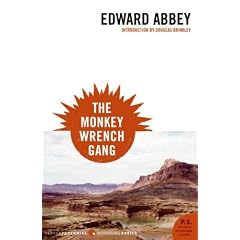 You've successfully navigated the abyss of sophomoric thoughts and actions that is 10th grade. Congratulations. It is time to read something provocative, controversial, relevant, and littered with savage and riotous acts in the name of preserving our environment. In Edward Abbey's The Monkey Wrench Gang, you will find all of the above, delivered with raw wit in a precise and unique prose style. Edward Abbey was a bit of a rebel, lived a nomadic life of outdoor adventure, and was completely absorbed in the desert wilderness of the Southwest. The Monkey Wrench Gang is about a gang of atypical environmental activists that will do, and do "do" just about everything to save the beautiful landscape of the Southwestern United States from being developed, ruined, scarred, lost forever. I know what you're thinking, but this "gang" is not a bunch of tree-huggers that haven't showered in years. These are average characters, that sabotage bulldozers and vandalize railways in their spare time. Don't worry, it is entirely fictional. Read it. Feel it. Think about why it means something in the present. And then read something else.
Good Luck,
Tim
(originally posted at: Bing Lonsdale)
Other Info: